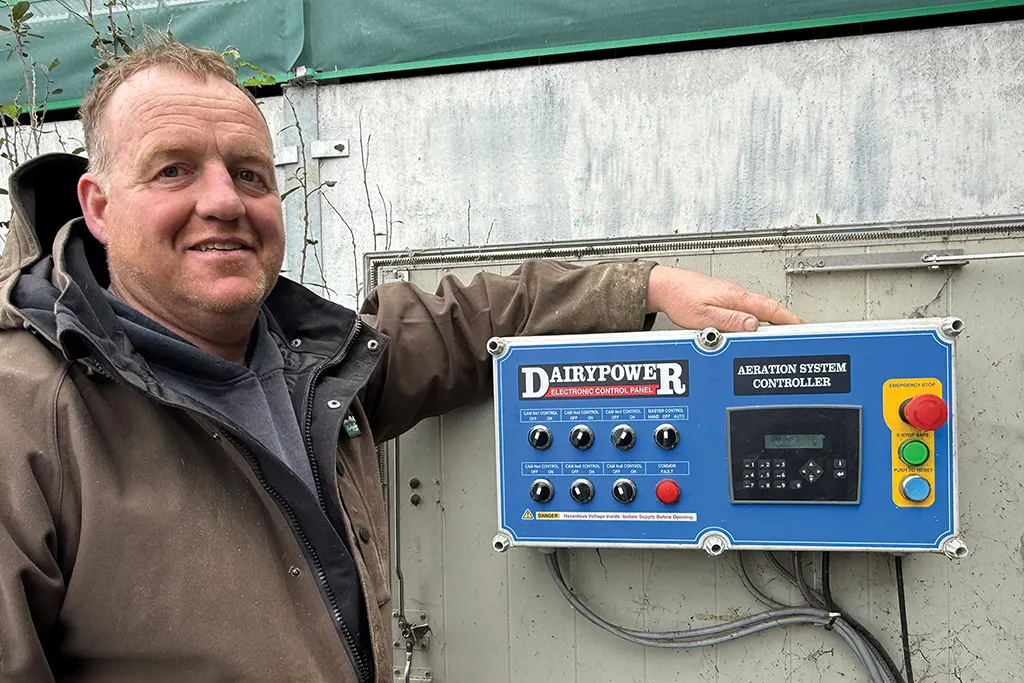
Investing £78,000 in a two million gallon aerated slurry lagoon back in 2020 is paying dividends, says Dylan Evans. “The system is achieving a return on investment over four to five years as well as solving our expanded herd’s waste management issues and it is also delivering those hard to measure benefits including eliminating noxious smells and gases – it’s safer.”
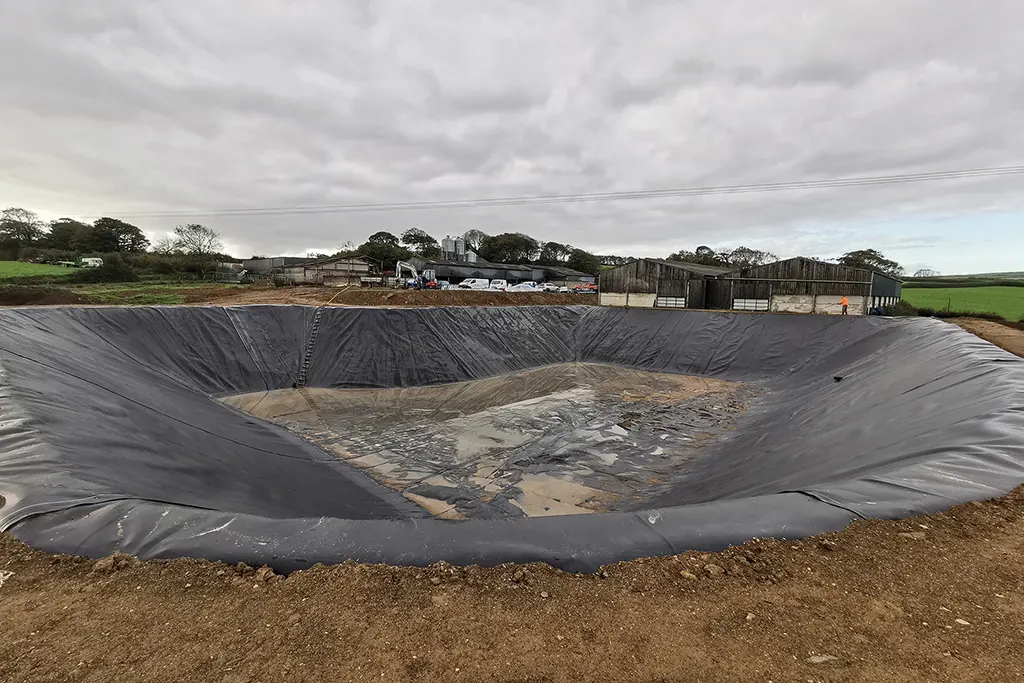
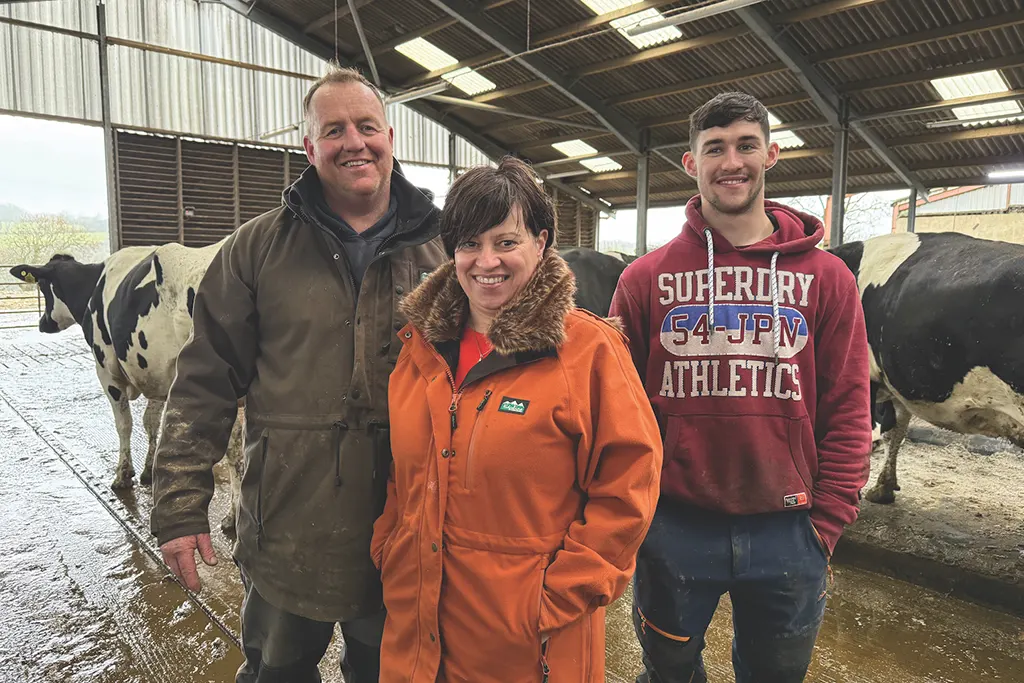
Refurbishing the unit’s 40-year-old lagoon featured amongst the Evans family’s plans for herd expansion and securing the business’ future. “We considered enlarging the pit, lining it and introducing aeration for various reasons,” explains Dylan who together with his wife, Ann and son, Owain manage a 250-cow all year-round calving herd based on their 400-acre unit near Cardigan.
“The biggest win to investing in aeration has been to enhance the slurry’s nutrient value to such a degree we were initially able to grow 18% more grass from slurry alone and are now consistently averaging 15% a year more. We’ve costed that 15% extra grass to be worth over £23,000 per year in terms of fresh weight silage coming off the field over three cuts.
“We are applying the same amount of slurry per unit area as we used to before we installed the Dairypower Smart Slurry Aeration System, but since we made the decision to take our entire unit out of organic management in 2022, we are now growing more kilograms of grass per acre which is allowing us to cut back on the grazing ground and make more silage,” he says.
“Yes, we have introduced purchased fertiliser since organic reversion, however it’s reserved for minimal applications on land we are unable to reach with our umbilical system.”
He continues: “Aeration is overcoming the various issues we had at spreading time, for example contractors arrived twice a year to empty the pit but we never knew when they’d exactly turn up which threw us when it came to agitation, consequently slurry was being applied in various states of mix.
“Nowadays, we’re finding every gallon that goes out is consistently mixed. In fact, it’s so viscous, it can travel through our umbilical system to land over one and a half miles away. The system has also freed up one man and a tractor for eight days at a time during agitation, along with the associated variable costs plus wear and tear.
“Previously there used to be settlement in the lagoon and we had that extra job of taking in loading shovels and a spreader to clean it out, however during the last five years we have never had that issue.
“Then there’s also the benefits you can’t put figures on. Aeration has removed the build-up of dangerous gases such as hydrogen sulphide and methane, that weren’t always apparent when we used to agitate the slurry prior to spreading. Nowadays it doesn’t emit those smells and we no longer have to plan the spreading schedule around the neighbouring village’s B&B holiday season.”
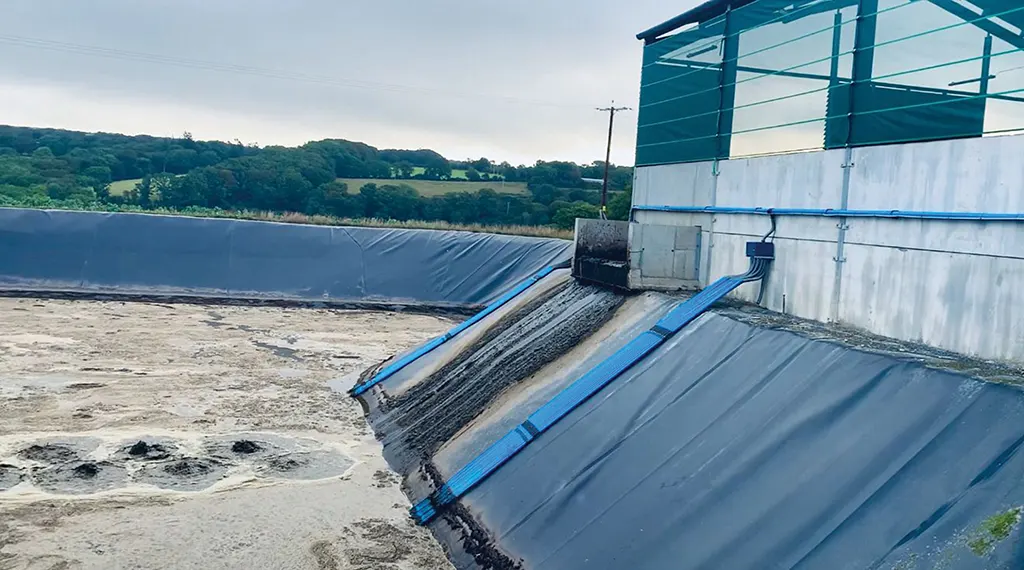
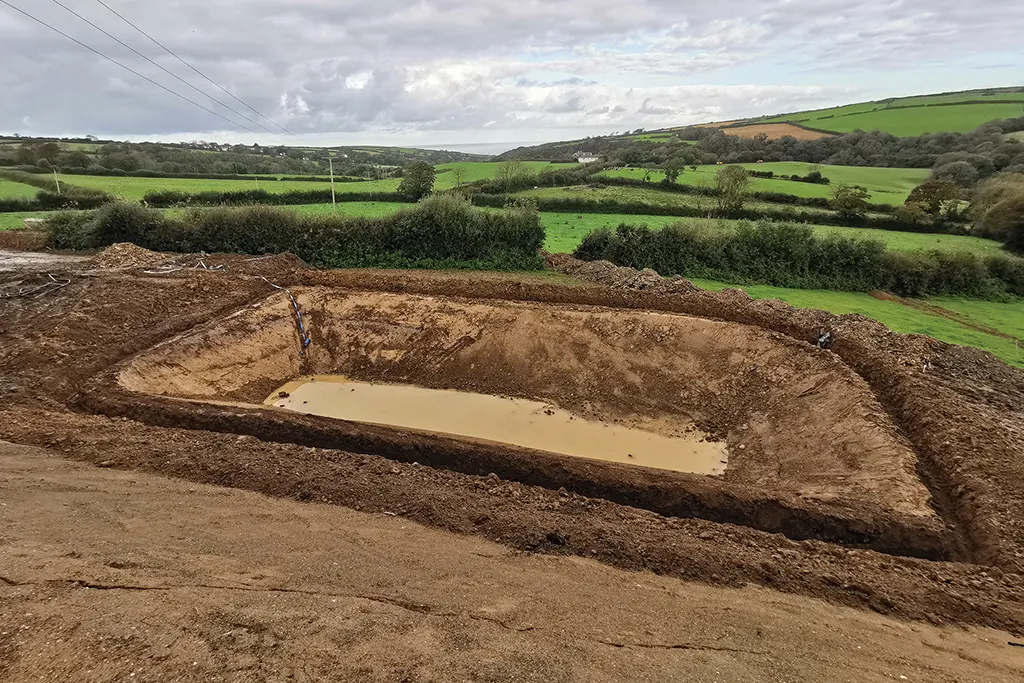
The Evans’ decision to invest £78,000 in the slurry lagoon with eight months capacity together with the Dairypower Smart Slurry Aeration System was made in 2020 as part of their business expansion. “We agreed to expand cow numbers, upgrade and double the accommodation – sufficient for 300 cows and also double the capacity of our slurry storage facilities. The project, which included enlarging the existing lagoon to a depth of 22’, commenced that year and was completed within four months.
“We costed the options to replace our 650,000 gallon clay lined lagoon, but concluded repurposing by increasing its capacity, lining with plastic and introducing the Dairypower aeration system was the most cost-effective option. An underground slatted system was going to cost 50% more, and a concrete shuttered pit 35% more.
“Aeration also eliminated the risk posed by mechanical agitation – the lining could get ripped. I’d read about aeration increasing the value of the slurry and it being continuously kept in a suspension so there was no requirement for additional agitation prior to application. I also visited other installations on farm.”
Dylan says he also learnt that compared with slurry from the agitated lagoon, aerated slurry has been proven to deliver conditions for its microorganisms to create less nitrogen loss through ammonia emissions and generate more plant available organic nitrogen that stays longer in the soil. This helps to prevent loss through wash-off of more mobile forms such as nitrate and ammonium. “The impact has been proven to us too that it’s both tangible and visible; the grass is greener and we’ve evidence there is more life in the soil.”
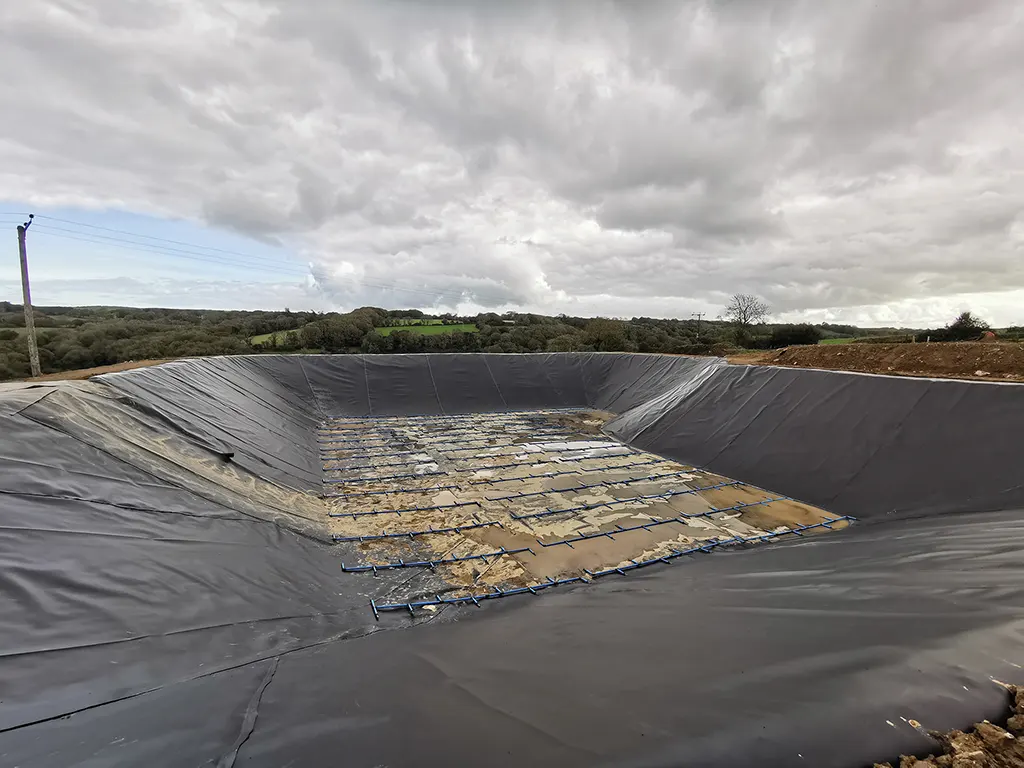
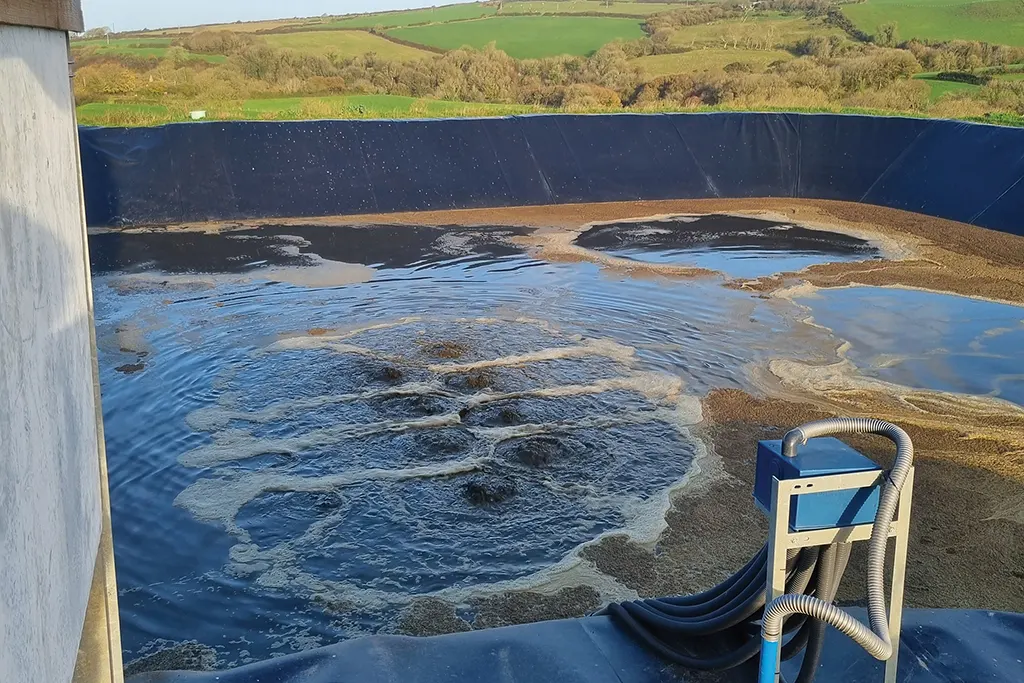
The Dairypower Smart Slurry Aeration System features over three quarters of a mile of non-degrading uPVC pipework covering the 120’ by 120’ base of the lagoon. The 50mm diameter pipes which are safely secured to the floor, are connected to the layout of aeration manifolds which have multiple self-closing non-return outlets. The system is serviced by a single pump unit and four patented rotary values which distribute a high-volume of low-pressure air to each manifold.
The system is programmed to run automatically six times a day pumping air on a rotary basis around the whole lagoon. The rising air bubbles automatically mix the slurry into a consistent homogeneous and pumpable state 365. It runs on 5.5kWh. Maintenance requirements are minimal and the system is serviced twice a year.
The Evans’ contractors manage the first application of the year on to the grazing platform and silage leys. Slurry is pumped out of the lagoon with a Doda pump from one main outlet pipe which connects up to an umbilical spreading system. The farm team manage the follow up applications themselves with a Major 2400-gallon tanker with trailing shoe spreading between 2,000 to 2,500 gallons per acre on to each of up to four cuts, while a trailing shoe follows the cows around the grazing platform spreading 1,500 gallons per acre.
Plans to introduce a floating cover within the next 12 months will firmly future proof the system for the next 30 years, Dylan says. “A cover will enhance slurry value, reduce spreading costs, increase the lagoon’s capacity as well as meet with pending legislation. There’s also the potential to recycle water collected from the surface for wash down purposes.”
Installation fixed costs 2020
| Digging | £11,000 |
| Liner, 3,300m2 2mm gauge | £22,000 |
| Dairypower Smart Slurry Aeration system | £45,000 |
| Total | £78,000 |
Previous annual running costs
Agitation: 18 days/year
| Labour: 18 days x 6 hours | £1,350.00 |
| Tractor depreciation £7.50/hour | £1,350.00 |
| 95L diesel/day | £1,282.50 |
| Mixer maintenance | £450.00 |
| Total | £4,432.00 |
Current annual running costs
5.5kWh motor x 3 hours/day = 16.5 kWh
| @23pp unit = £3.79/day | £1,350.00 |
| Pumping 7 hours x 18 days | £1,350.00 |
| Annual service charge | £1,282.50 |
| Total | £1,544.56 |
| Annual running cost savings | £2,887.44 |
| Annual lagoon sediment clean out savings | £1,630.00* |
| Annual added forage value | £23,475.00** |
| Aeration system annual cost benefit | £27,992.44 |
| *Muck spreaders x 2 @ £45 each/hour x 10 hours | £900 |
| Loading shovel @ £55/hour | £550 |
| 250 litres diesel ×.72ppl | £180 |
| Total | £1,630 |
| **313 acres, three cut system | |
| 313 x 20 tonnes /acre = 6,269 tonnes freshweight x 15% = 939 tonnes x £25/tonne | |
| Total | £23,475.00 |
This article appeared in Farmers Guardian 12 December 2025. Read it here